Top 5 Bathroom Remodeling Trends for 2026
Published on July 26, 2026 • 5 min read
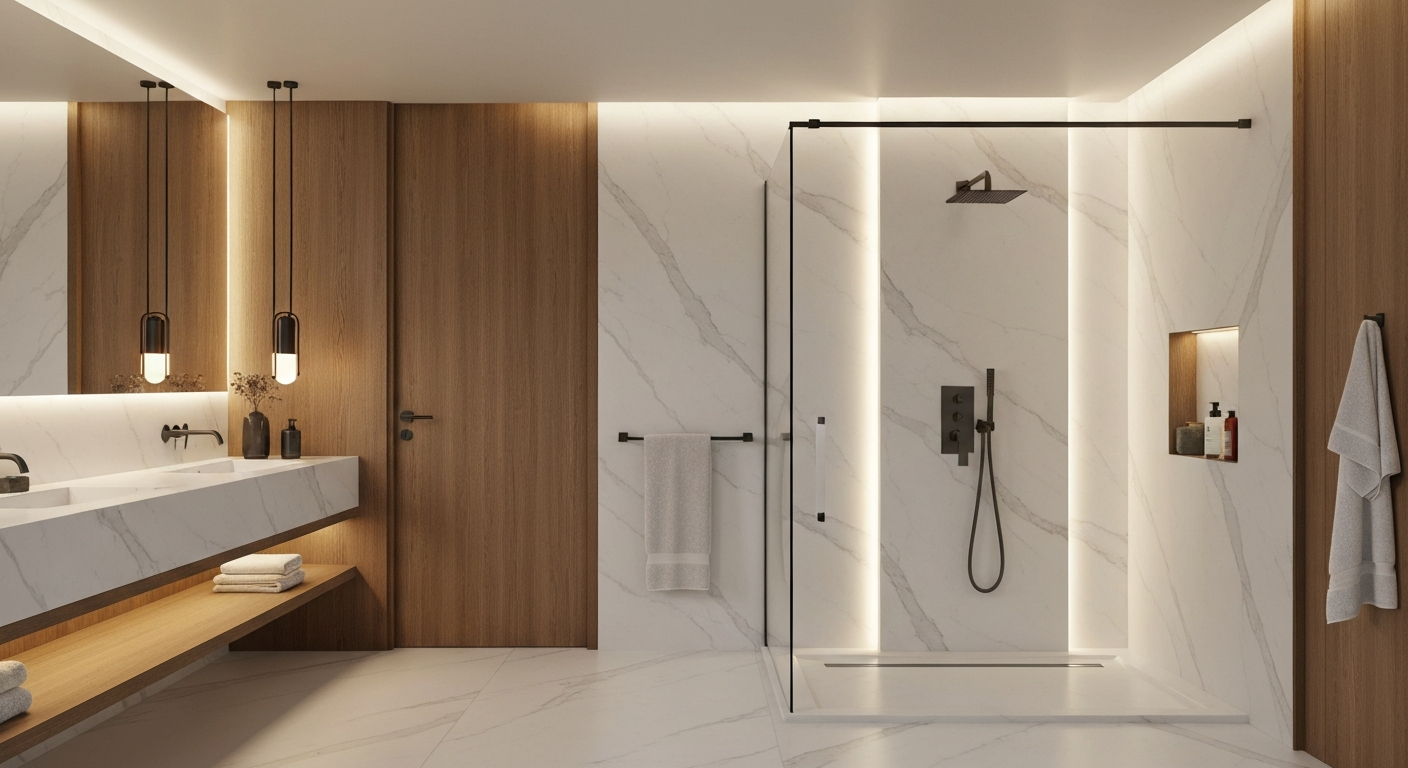
Bathrooms are becoming more personalized, comfortable, and practical in 2026. Instead of focusing only on appearance, homeowners are choosing features that support relaxation, easier maintenance, better organization, and long-term accessibility.
According to the National Kitchen & Bath Association’s 2026 Bath Trends Report, wellness, smart technology, natural materials, larger showers, and efficient storage are shaping the modern bathroom.
Whether you are planning a complete bathroom renovation or updating a few important features, these five remodeling trends can help you create a space that feels modern without sacrificing everyday function.
1. Smart Showers and Personalized Wellness Features
Smart technology is moving beyond thermostats and kitchen appliances. In 2026, homeowners are using connected bathroom fixtures to create more convenient and personalized daily routines.
A smart shower may allow users to control water temperature, flow, duration, and preferred settings through a digital panel, mobile app, or compatible voice-control system. Some systems can store different settings for individual household members, helping everyone begin a shower at their preferred temperature.
Other technology-focused upgrades include:
- Programmable shower controls
- Heated bathroom floors
- Smart toilets and bidet features
- Motion-activated faucets
- LED mirrors with adjustable brightness
- Programmable lighting scenes
- Built-in speakers
- Automatic ventilation and humidity controls
Bathroom technology is also being used to support relaxation. Steam showers, aromatherapy, chromotherapy lighting, integrated seating, and customizable plumbing fixtures are becoming part of a broader shift toward individualized wellness spaces.
The best smart features are not simply decorative gadgets. They should make the bathroom more comfortable, efficient, or easier to use. Before installation, homeowners should consider electrical requirements, internet connectivity, product compatibility, maintenance, and whether replacement parts will remain available.
2. Floating Vanities with Smarter Storage
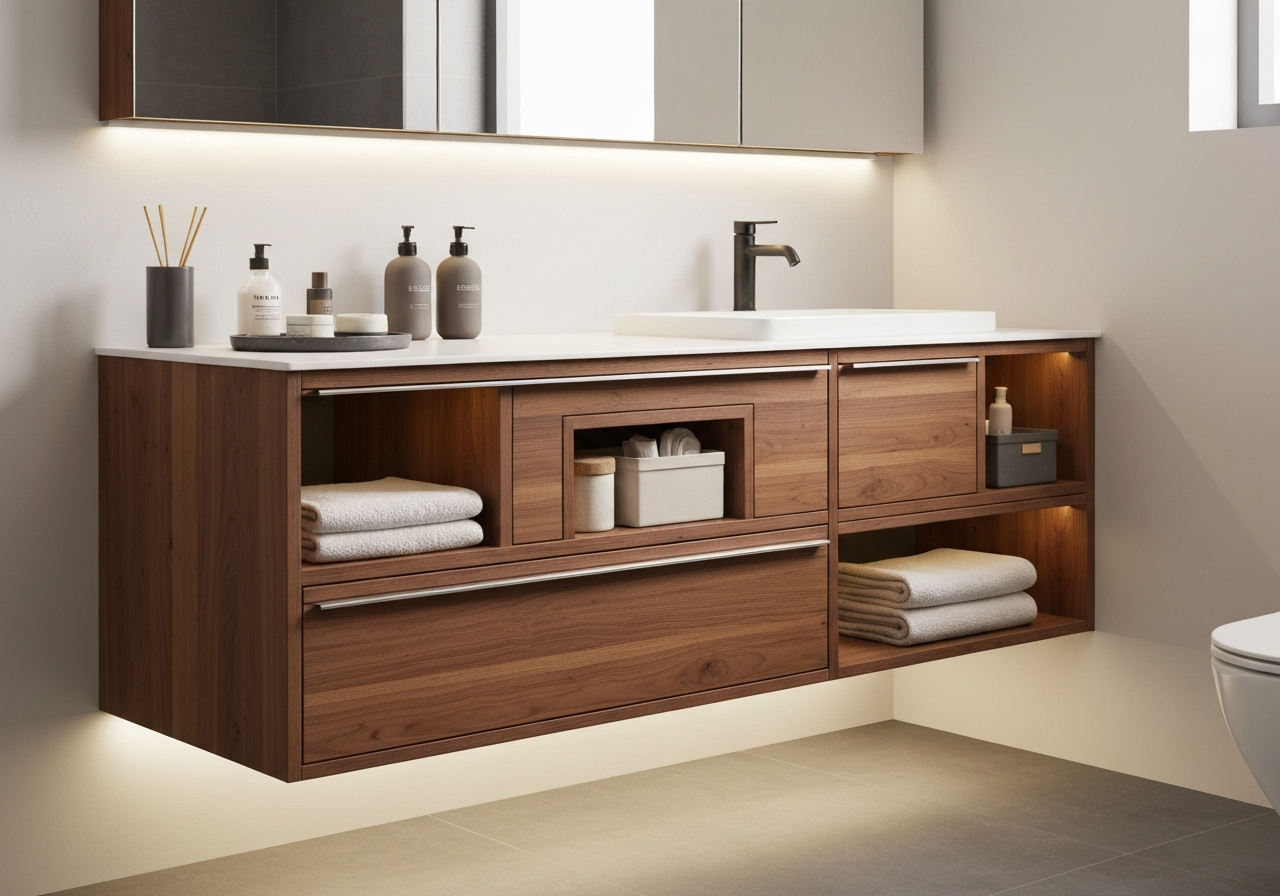
Floating vanities remain a major bathroom-remodeling trend in 2026. These wall-mounted cabinets leave part of the floor visible, helping the bathroom feel lighter, cleaner, and more open.
They can be especially effective in small bathrooms and powder rooms, where a traditional floor-mounted vanity may make the space feel crowded. Raising the cabinet off the floor also makes it easier to clean beneath the vanity.
Floating vanities are available in many styles, including:
- Warm natural wood
- Fluted or reeded cabinet fronts
- Minimalist slab doors
- Integrated stone sinks
- Double-sink configurations
- Wall-mounted faucets
- Under-vanity lighting
Designers are also placing greater emphasis on storage that supports personal routines. Built-in outlets, divided drawers, hair-tool storage, medicine organizers, and dedicated areas for skincare or makeup can make the vanity more useful without creating countertop clutter.
Proper installation is essential. Because the vanity is supported by the wall rather than legs, the framing must be strong enough to hold the cabinet, countertop, sinks, and stored items. Plumbing should also be carefully positioned because pipes may be more visible beneath some floating designs.
3. Larger, Curbless Showers
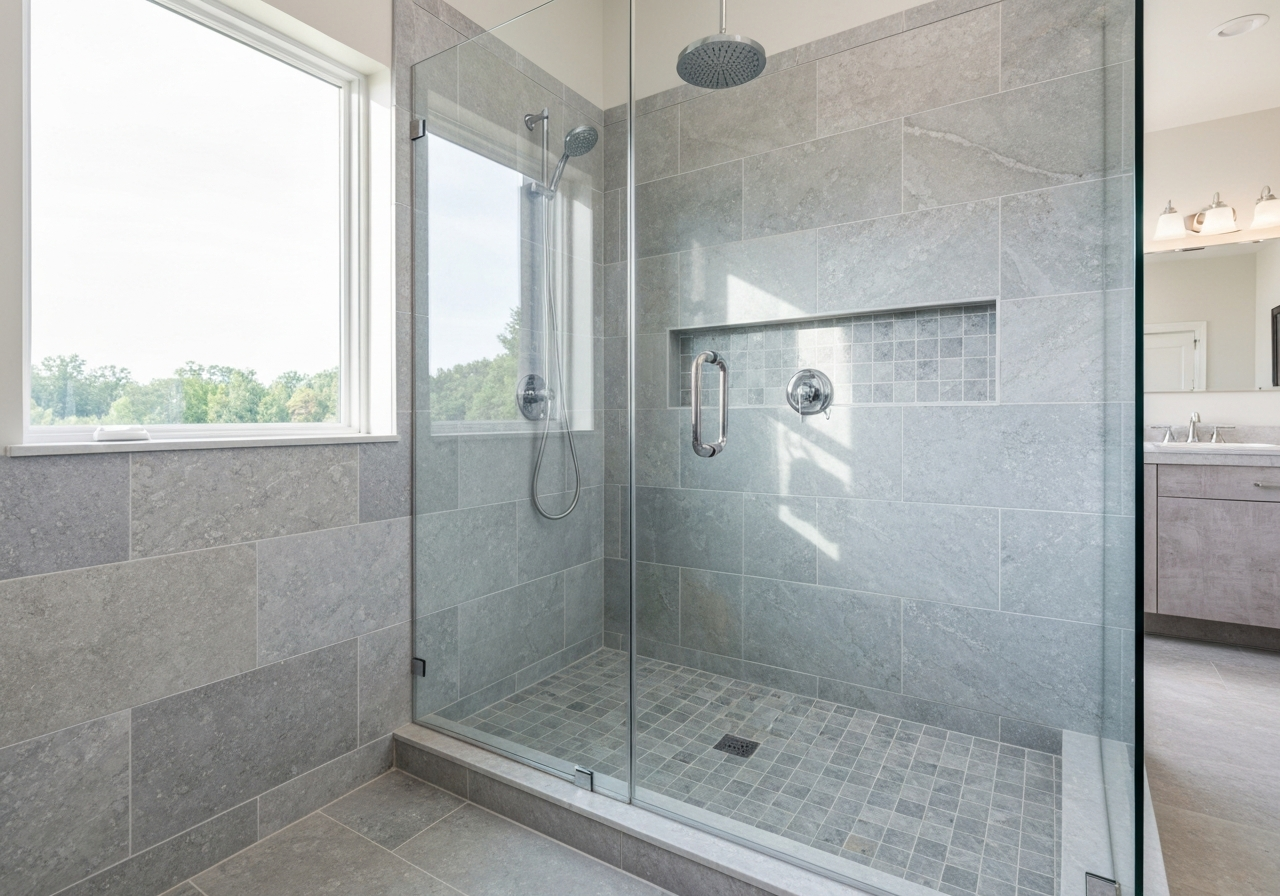
Many homeowners are giving the shower more space during bathroom renovations. The NKBA reports that 55% of surveyed professionals said a larger shower was more important to clients than including a bathtub.
Larger showers provide room for features such as:
- Dual showerheads
- Handheld sprayers
- Built-in benches
- Recessed storage niches
- Steam systems
- Shelving
- Grab bars
- Improved lighting
Curbless, or zero-threshold, showers are also becoming popular. Instead of stepping over a raised edge, the user enters across a nearly level floor.
This approach can create a cleaner, more continuous appearance while improving accessibility for people with limited mobility. It may also help homeowners prepare the bathroom for changing needs as they grow older.
Accessibility is becoming an important remodeling consideration. Houzz reported that 68% of homeowners in its 2025 bathroom study considered special needs during their projects, including present or future aging-related needs.
A curbless shower must be carefully planned to prevent drainage problems. The floor needs the correct slope, waterproofing, drain placement, and transition between wet and dry areas. These details should be addressed before tile installation begins.
4. Warm Colors and Natural Materials
The cold, all-white bathroom is giving way to warmer and more inviting interiors. In 2026, homeowners are adding natural wood, earthy colors, soft textures, and less reflective finishes.
Popular color directions include:
Wood-faced vanities are gaining ground, while brushed, matte, and satin faucet finishes are being chosen more often than highly polished surfaces. NKBA’s 2026 report found that wood-faced vanities were selected by 62% of respondents as a popular direction, and matte, brushed, and satin faucet finishes all ranked above polished finishes.
Natural materials can be introduced through cabinetry, stone countertops, woven accessories, wood-look tile, textured walls, or warm metal fixtures. These features can soften a modern bathroom and help it feel more like a comfortable retreat than a purely functional room.
Homeowners do not have to use natural materials everywhere. A wood vanity, brushed-brass faucet, and warm neutral wall color may be enough to change the character of the space.
Materials should still be selected for bathroom conditions. High humidity and regular water exposure can damage products that are not properly sealed or designed for wet environments.
5. Low-Maintenance Surfaces with More Personality
Homeowners want bathrooms that are easier to clean, but they are no longer limiting themselves to plain or predictable finishes.
Large-format flooring and wall panels can reduce the number of grout lines, creating a smoother appearance and fewer narrow joints to maintain. In NKBA’s 2026 findings, 89% of surveyed professionals said homeowners were looking for smaller or no grout lines on bathroom floors, while 80% expected large-format flooring to remain popular.
At the same time, patterned, textured, and handmade-looking tiles are being used to add personality. Statement tile may appear on:
- A shower wall
- The vanity backsplash
- The bathroom floor
- A recessed shower niche
- The wall behind a bathtub
- A powder-room feature wall
The key is balance. A bold tile can become the room’s focal point while quieter flooring, cabinetry, and fixtures keep the design from feeling overwhelming.
Homeowners may also combine large, low-maintenance surfaces with a smaller area of decorative tile. For example, large-format porcelain could cover most of the shower while a textured tile highlights the niche or vanity wall.
Choosing Bathroom Trends That Will Last
Not every trend belongs in every bathroom. Before choosing materials or features, consider how the room is used, who uses it, and how long you expect to remain in the home.
A successful remodeling plan should account for:
- Available space
- Storage requirements
- Ventilation
- Water resistance
- Cleaning and maintenance
- Accessibility
- Energy and water use
- Electrical and plumbing requirements
- Overall project budget
It is also important to distinguish between a lasting improvement and a feature selected only because it is currently popular. Curbless showers, efficient storage, durable surfaces, and quality lighting can provide long-term value even as colors and decorative styles change.
Plan Your 2026 Bathroom Remodel
The top bathroom-remodeling trends for 2026 combine comfort, technology, natural style, and practical design. Smart showers provide greater control, floating vanities make rooms feel more open, and larger curbless showers support both luxury and accessibility.
Warm materials and expressive surfaces add personality, while improved storage and low-maintenance finishes make the bathroom easier to use every day.
An experienced bathroom-remodeling professional can help you compare options, develop a realistic layout, and ensure that plumbing, electrical work, waterproofing, and structural changes are completed correctly. With thoughtful planning, you can create a bathroom that feels current in 2026 while continuing to serve your household for years to come.
Ready to update your bathroom?
Let's discuss how we can bring these functional and beautiful trends into your home.
Call +1 888-546-5896